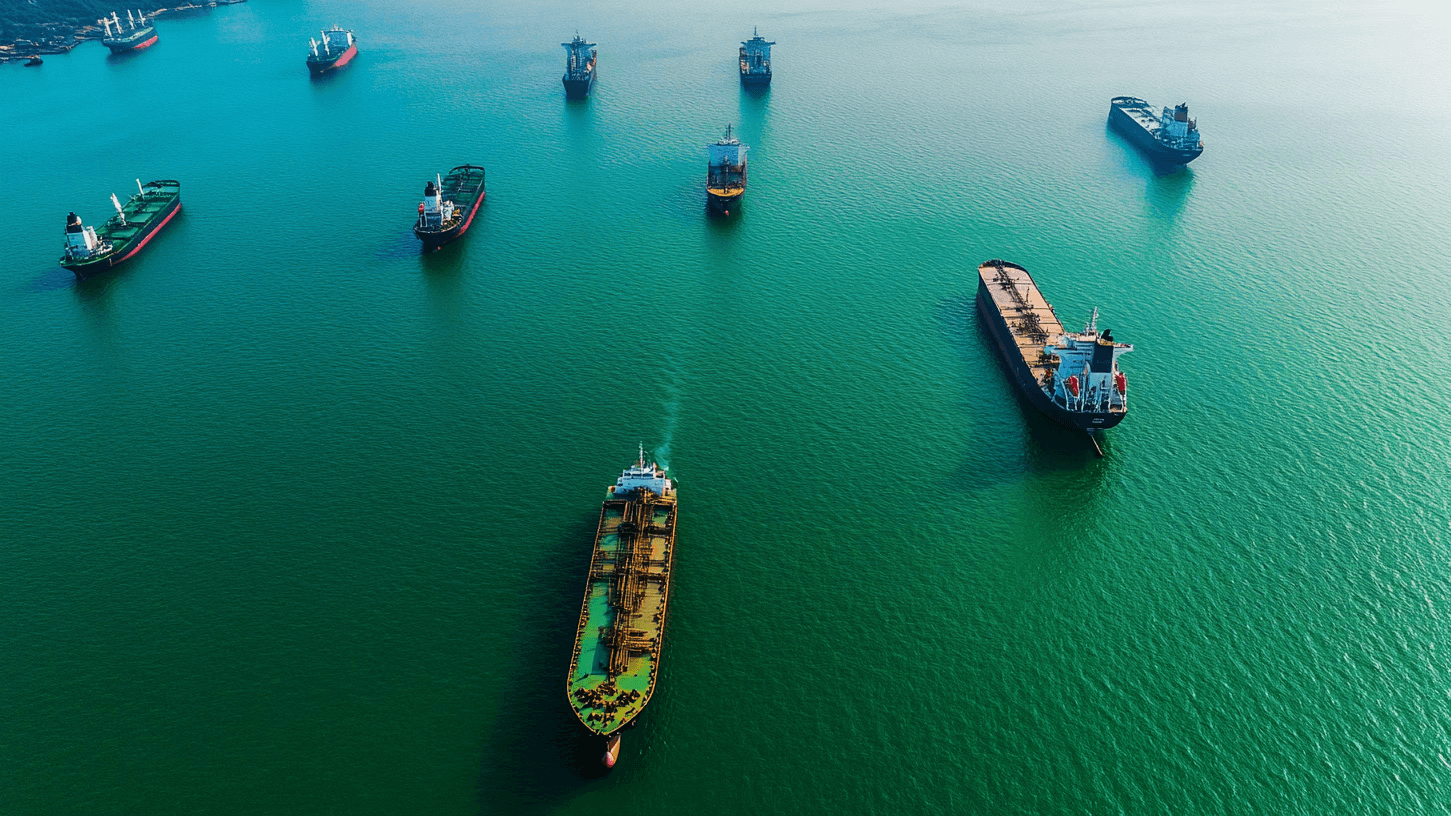
Six weeks after missile strikes took Qatar's largest gas facility offline and the Strait of Hormuz closed to most shipping, oil is holding near $106 a barrel and European gas prices have jumped by roughly 70%. The immediate question is no longer whether prices will spike. It is whether the energy contracts being signed today are priced against a crisis that resolves in weeks, or one that reshapes power markets into next winter and beyond
Apr 14, 2026
One month ago, we wrote about what the US strike on Iran meant for the grid and renewable energy prices, and framed the conflict as a sudden shock to the system. Six weeks on, that framing is wrong. What started as a single event has become a prolonged disruption in the most important energy shipping route in the world, and it is now actively reshaping how power markets, gas contracts, and renewables investment cases are priced.
This report walks through what is actually happening, what it means for the energy market, and what scenarios realistically lie ahead.
What is happening
Two things are happening at once, and they require different responses.
First, prices have gone up across the board. Oil, gas, petrochemical feedstocks, helium, fertilisers, and shipping rates are all materially higher than they were before the conflict. That is the part of the story most people see.
Second, and more importantly, some of these commodities have moved from "expensive" to "unavailable." For several weeks now, there have been buyers willing to pay the market price who simply cannot get cargoes. That is a different kind of problem, and it does not resolve the moment a ceasefire is announced.
The three energy-relevant commodities in that second category are crude oil, LNG, and naphtha (the petrochemical feedstock that also underpins a significant chunk of plastics used in solar modules and wind blades).
Crude is still leaving the Gulf, but only to a short list of countries that Iran has chosen to let through. Iran has set up a de facto toll system, taking payment in yuan and cryptocurrency and barring any ship linked to the US or Israel. Crucially, marine war-risk insurance for the Strait was withdrawn almost immediately after the crisis began and has not come back, so cargoes without special coverage are stranded.
LNG is a harder story. Missile strikes in mid-March damaged processing trains at Qatar's Ras Laffan complex, the export hub for roughly a fifth of the world's LNG. Repairs are expected to take years rather than months. Shell, the world's largest LNG trader, has invoked force majeure on its Qatari cargoes, meaning it cannot legally deliver what it owes customers. QatarEnergy has done the same on long-term contracts to buyers in Italy, Belgium, South Korea, and China. That supply is not coming back quickly.
Naphtha is where the knock-on effects for industrial power demand and renewables supply chains become obvious. Dow's CEO Jim Fitterling told CERAWeek that about one-fifth of global petrochemical capacity is effectively blocked, and estimated a recovery window of roughly 250 to 275 days once the Strait reopens. That is a clean, unambiguous signal from inside the industry, and it is the reference number most downstream buyers should be working from.
Behind all of this sit secondary shocks that feed back into the energy complex in less obvious ways. Qatar produces around a third of the world's helium as a byproduct of its LNG operations, and that supply is offline. Helium is critical to semiconductor manufacturing and hospital MRI systems, and its shortage will eventually constrain chip production. For utilities planning around AI-driven data centre power demand, this is one of the first real supply-side brakes on that growth curve.
What this means for energy prices and power markets
Three consequences are worth pulling out clearly.
European gas prices are elevated, but the real problem is next winter. Dutch TTF, the European benchmark for natural gas, has risen roughly 70% since the crisis began. That is a sharp move, but European storage was full going into the crisis, so the lights are not going off this spring. The problem is that Europe normally uses the summer to refill storage for the next heating season, and much of the LNG that would have done that refilling is not available. A ceasefire announced today would still not put molecules back into European tanks in time for the winter of 2026 to 2027. Utilities writing capacity auctions for that period should be pricing a structural gas premium, not a passing spike.
Gas-fired power is clearing at costs that make renewables PPAs look structurally attractive again. Combined-cycle gas plants running on today's TTF prices are setting marginal prices in European power markets that shift the comparison against new solar and wind projects. For renewables developers, this is the clearest window in two years to sign long-duration power purchase agreements at prices that reflect a credibly higher gas floor. For corporate buyers, the opposite is true: locking in gas-linked power now carries more duration risk than the curve suggests. The EIA's April forecast update explicitly flags Hormuz closure as its key forecast driver.
Solar and wind supply chains have a petrochemical problem. Because naphtha is a building block for the plastics and resins used in module encapsulation and blade composites, a global petrochemical shortage eventually becomes a solar module and wind component shortage. The second-half 2026 module price environment is already being shaped by decisions happening at petrochemical plants right now, regardless of what happens in diplomacy.
What scenarios look like from here
The path ahead is not a single outcome. Four scenarios are realistically live, and their probabilities have moved meaningfully in the last fortnight as the April 6 US deadline passed and the US waiver on Russian crude expired.
Scenario one: a short halt and quick ceasefire. The window for this has narrowed sharply. It is now a low-probability outcome, priced in the low single digits. If it does happen, oil would retrace toward the mid-90s and gas would ease, though most of the physical damage to Qatari infrastructure remains in place regardless.
Scenario two: an extended standoff lasting two to four months. This is the fallback case, and the market has been pricing somewhere around a one-in-three probability. Diplomacy works slowly through back-channels, shipping gradually resumes under some form of controlled reopening, and marine insurance normalises over the following couple of months. Oil trades in a $106 to $160 range through the period.
Scenario three: structural escalation into the second half of the year. This is now the majority case. Israeli strikes continue, Iranian mine and drone operations become less centrally coordinated after the killing of the IRGC Navy commander, and the risk of attacks on Kharg Island, Iran's main crude export terminal, is real. Wood Mackenzie has publicly flagged $200 a barrel as "not outside the realms of possibility" under a sustained closure, and Axios has tracked that same worst-case scenario as the reference for longer-dated trades.
Scenario four: the war ends, but the Strait stays effectively closed. This is the outcome most energy desks have not fully priced, and it is the most dangerous for commercial counterparties. Iran's parliament has been drafting a "Strait of Hormuz Management Plan", a toll-fee law that has already cleared committee. If that law passes, marine insurers are unlikely to restore normal coverage under Iranian toll jurisdiction. A ceasefire headline would not translate into cargoes moving. Oil prices would fall as the war premium comes out, while physical flows stay constrained for another three to six months. For a gas buyer or a refiner, this is the worst of both worlds: the paper market says the crisis is over while the physical market says it is not.
A second chokepoint is the real tail risk
Everything above assumes the crisis stays confined to the Strait of Hormuz. The scenario that changes the picture overnight is if Yemen's Houthis, who have declared full military readiness but not activated, resume attacks on Red Sea shipping. Tehran has explicitly threatened a second front at the Bab el-Mandeb strait, which would disrupt the other major route through which Gulf oil reaches Asia and Europe. Al Jazeera's analysis of Houthi autonomy is a useful reminder that the group coordinates with, but is not controlled by, Iran, which means escalation there could happen faster than diplomatic channels can contain.
If that second chokepoint activates, the UAE's Fujairah pipeline becomes the only remaining bypass, and Asia-available crude supply falls off a cliff. Insurance markets would freeze within roughly seventy-two hours, no physical blockade required. This is the single event that pushes oil into the $150-plus range in a matter of days.
What to watch over the next two weeks
Whether the Iranian toll law passes a full parliamentary vote. If it does, every commodity shortage plan on the desk should extend by several months regardless of diplomatic signals.
Whether a named Iranian ceasefire negotiator emerges through the Pakistan back-channel. None has appeared yet. If one does, the ceasefire probability meaningfully improves.
Whether shipping traffic through the Strait and marine war-risk premiums start to normalise. These are the only real-economy signals that separate a paper ceasefire from an actual reopening.
Any sign of Houthi activation in the Red Sea. The single highest-impact event left on the board.
Fertiliser and downstream chemical signals in late April and May. When urea, sulphur, and pharmaceutical feedstocks enter physical shortage, it confirms the crisis has moved beyond energy into the broader industrial and healthcare complex, which in turn feeds back into industrial power demand.
The bottom line
The market was priced, at the start of April, for a diplomatic resolution that the underlying politics is not supporting. Two weeks on, the curve has largely caught up to the idea that this is a months-long crisis, not a weeks-long one. Iran has economic reasons to want a deal, but the toll legislation gives it a way to end hostilities without actually reopening commercial shipping, and that is a scenario energy traders and power buyers should be actively planning for.
The investment case we laid out a month ago has sharpened rather than weakened. Fossil-fuel price volatility is now a structural feature of the 2026 trading environment, not a passing tail risk. The renewables build-out, grid flexibility investments, and long-duration PPAs that looked marginal twelve months ago look materially better today.
What this environment also exposes is how much value is now sitting in how power is actually traded, not just how it is generated. A single Gulf event now ripples through every power-market timeframe at once, repricing day-ahead curves, widening intraday spreads, pushing balancing costs higher in gas-setting grids, and moving ancillary services prices as flexibility becomes more valuable. Asset owners running a battery, a wind farm, or a gas peaker only through day-ahead are leaving returns on the table that are now consistently larger in intraday and balancing. Trading desks and optimizers that can route the same asset across day-ahead, intraday, balancing, and ancillary products in one view are the ones capturing those spreads before they clear. AI-driven forecasting and automated execution are no longer a marginal edge in power trading. They are what it takes to keep up with a grid that is now re-pricing multiple times within the same hour on signals from half a world away.
The question is no longer whether gas-fired dispatch economics are going to re-rate. It is whether the power contracts you are signing this quarter, and the trading and optimisation systems you rely on to run assets across day-ahead, intraday, and balancing markets, are built for a grid that now moves on multiple fronts at once.